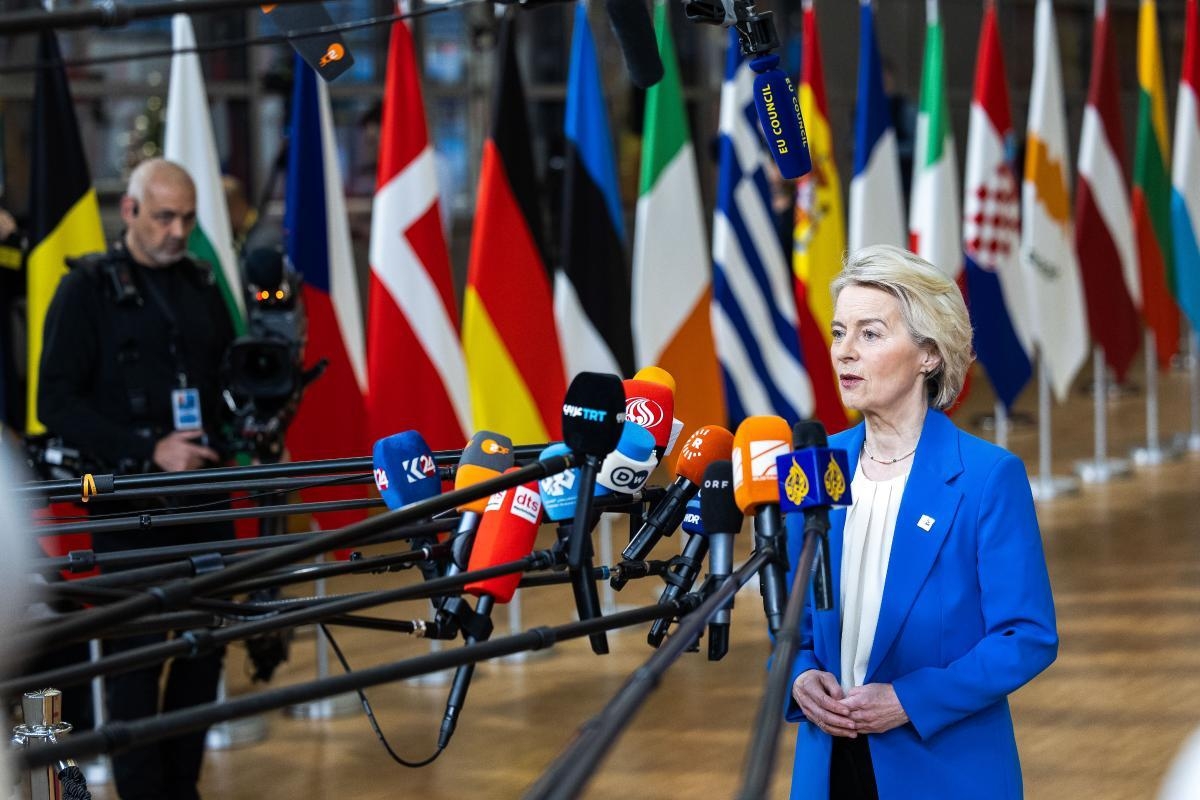
BRUSSELS — European Commission President Ursula von der Leyen announced a sweeping new round of sanctions against Russia on Thursday, arguing that only sustained economic pressure will force the Kremlin to engage seriously in peace talks as the war against Ukraine approaches its fourth anniversary.
“This is not the conduct of a state seeking peace,” von der Leyen said, describing Russia’s continued attacks on civilian infrastructure. “It is the behaviour of a nation waging a war of attrition against a civilian innocent population.”
In a statement unveiling what she called the European Union’s 20th sanctions package since Russia’s full-scale invasion, von der Leyen said the Kremlin’s military gains have come at a staggering human cost. Russian forces, she said, advanced on average only “between 15 and 70 metres per day” over the past year and seized “just about 0.8 percent” of Ukrainian territory, despite what she described as the heaviest casualty rate of any offensive since World War II.
At the same time, she accused Moscow of escalating attacks on non-military targets. “The Kremlin is doubling down on war crimes,” von der Leyen said, citing deliberate strikes on homes, energy facilities and heating systems that have left communities without power “in freezing temperatures.”
As diplomatic efforts continue — including talks now underway in Abu Dhabi — von der Leyen warned against illusions about Moscow’s intentions. “We must be clear-eyed,” she said. “Russia will only come to the table with genuine intent if it is pressured to do so. This is the only language Russia understands.”
The new sanctions package targets three major areas of the Russian economy: energy, financial services, and trade.
On energy, the commission proposed a full ban on maritime services for Russian crude oil, a move von der Leyen said would “slash further Russia’s energy revenues” and make it harder for Moscow to find buyers. Because shipping is global, she said the measure would be implemented “in coordination with like-minded partners” following a decision by the Group of Seven.
The EU also expanded its crackdown on Russia’s so-called shadow fleet, adding 43 vessels to its blacklist and bringing the total to 640. Additional restrictions would limit Russia’s ability to acquire tankers and ban maintenance and other services for liquefied natural gas carriers and icebreakers, steps von der Leyen said were intended “to further dent gas export projects.”
A second block of measures focuses on Russia’s financial system, which she described as a critical vulnerability. “This is Russia’s weak point, and we are pressing hard on it,” von der Leyen said. The package would add 20 regional Russian banks to sanctions lists and tighten controls on cryptocurrencies and trading platforms to close off routes for circumvention. Banks in third countries accused of facilitating illegal trade in sanctioned goods would also be targeted.
The third set of measures tightens trade restrictions, introducing new export bans on goods and services ranging from rubber products to tractors and cybersecurity services, worth more than €360 million. The EU would also impose fresh import bans on metals, chemicals and critical minerals valued at over €570 million, and restrict exports of materials used in explosives production. A quota on ammonia imports would cap existing trade.
To combat evasion, von der Leyen said the EU would, for the first time, activate its anti-circumvention tool, banning exports of certain advanced machinery and radios to jurisdictions where there is a high risk of re-export to Russia. The package also includes legal protections for European companies facing intellectual property violations or asset seizures in Russia linked to sanctions-related court rulings.
Von der Leyen pointed to economic data as evidence that the pressure is working. Russia’s oil and gas revenues fell 24 percent in 2025 compared with the previous year, she said, the lowest level since 2020, contributing to a widening fiscal deficit. “Interest rates stand at 16 percent. Inflation remains high,” she added. “This confirms what we already knew: our sanctions work.”
She called on EU member states to approve the measures swiftly, saying their adoption would send a powerful signal ahead of the war’s fourth anniversary that Europe’s commitment to Ukraine remains firm. “Our commitment to a free and sovereign Ukraine is unwavering,” von der Leyen said. “If anything, it grows stronger day by day, month by month, year by year.”
Alongside the sanctions, she highlighted broader European support for Ukraine, including the delivery of hundreds of generators, the adoption of a €90 billion loan to help Kyiv defend itself and coordination with the United States and other partners on security guarantees and postwar recovery.
“Across all these efforts runs one clear thread,” von der Leyen said. “That Ukraine’s security, prosperity, and free future lie at the heart of our Union.”