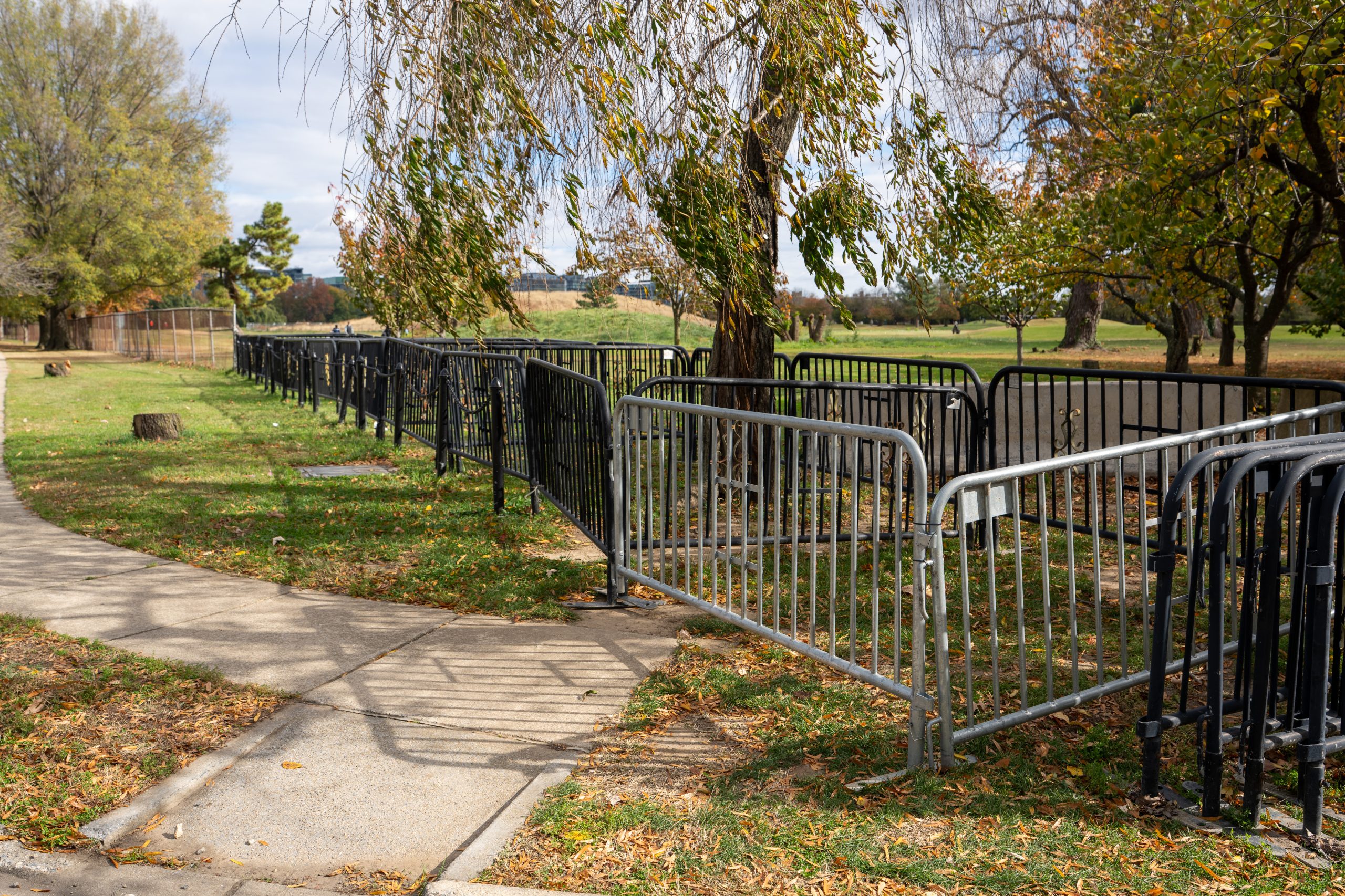
WASHINGTON — Security barricades and police cameras have appeared around the perimeter of East Potomac Park as federal officials prepare to close much of the park Sunday night despite an emergency legal challenge that could stop the shutdown.
The newly reported security preparations come as U.S. District Judge Ana C. Reyes considers a request by the D.C. Preservation League and two golfers to temporarily block the closure. After more than five hours of arguments Friday, Reyes did not immediately rule. She indicated a decision could come Saturday, leaving the future of the park uncertain less than a day before the scheduled restrictions take effect.
The National Park Service has formally ordered the closure of East Potomac Park south of Buckeye Drive SW beginning at 9 p.m. Sunday, Nov. 15. The order encompasses far more than the golf course at the center of President Donald Trump’s proposed redevelopment: Ohio Drive, Hains Point, waterfront walking and cycling paths, fishing areas, picnic areas, the miniature golf course, restrooms and the Wharf Jitney dock would all be off limits. The agency has not specified a reopening date.
In a Nov. 12 record of determination, the Park Service said it lacks the staffing and operational capacity to safely manage the park once National Links Trust stops operating East Potomac Golf Course. The nonprofit’s agreement to operate East Potomac ends by Nov. 15, while it will continue operating the District’s other two federally owned municipal courses, at Rock Creek and Langston, under a new lease.
The agency also points to deteriorating facilities and the condition of the waterfront seawall. Its closure document cites a May assessment identifying 110 deficiencies at the golf course, including 69 rated critical or urgent, and an earlier study describing severe deterioration along portions of the seawall. The agency says unrestricted access could pose safety risks and threaten historic resources.
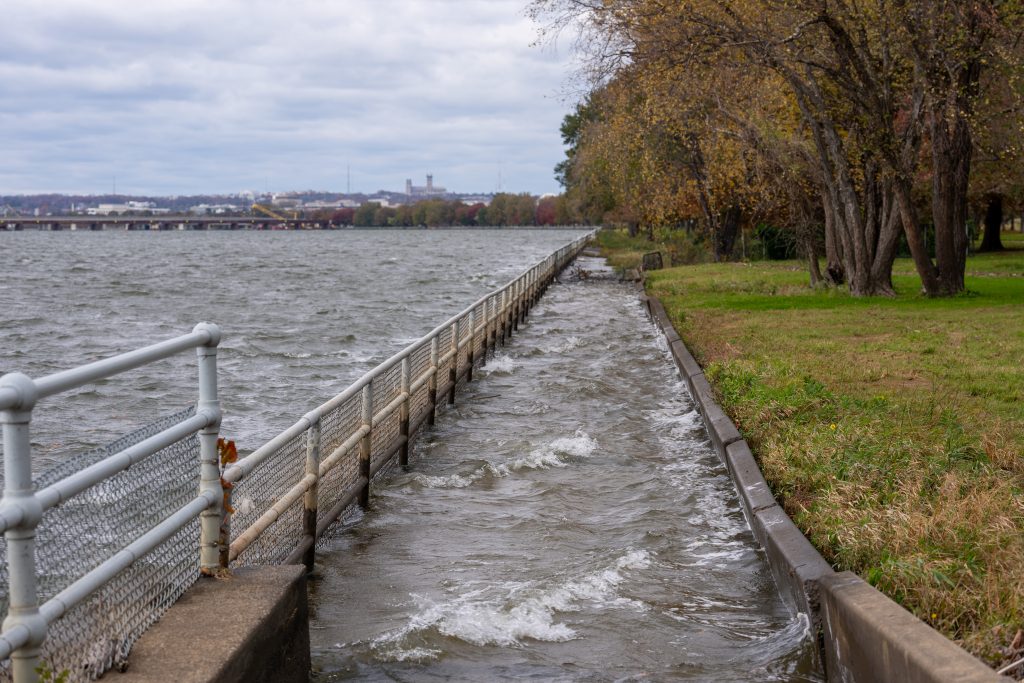
But during Friday’s hearing, Reyes pressed government attorneys on why longstanding problems suddenly required closing the entire peninsula on Nov. 15, rather than restricting specific hazardous locations. Government lawyers acknowledged that there is no established timetable or funded plan for repairing the seawall, according to accounts of the hearing. The plaintiffs contend the safety explanation is a pretext for carrying out the president’s golf-course redevelopment.
The litigation began in February, when preservation advocates and golfers challenged the administration’s plans for the historic public course. The controversy escalated in October after crews removed hundreds of trees and Trump publicly announced plans to close the course for approximately 15 months to transform it into a championship-level facility.
On Oct. 26, Reyes issued a preliminary injunction restricting additional tree removal and requiring advance written notice of closure or irreversible alterations. On Nov. 9, she rejected the government’s request to suspend that injunction while it appeals. The injunction does not, by itself, resolve the separate emergency request to prevent Sunday’s closure.
The proposed redesign, associated with golf architect Tom Fazio, has been submitted for review by the National Capital Planning Commission, which is scheduled to consider it Dec. 3. The plans have drawn objections over their potential effects on public golf, park access and the recreational uses of Ohio Drive and Hains Point. Environmental and historic-preservation review remains an issue in the case.
Reyes has also said an inquiry into the conduct of government lawyers will proceed, following conflicting representations to the court about the administration’s plans and notice of tree removal. No finding of misconduct has been established.
Unless the court intervenes or the Park Service changes its order, public access restrictions are scheduled to begin at 9 p.m. Sunday and continue indefinitely, subject to modification or rescission by the park superintendent. Signs, gates, barricades and fencing may be used to enforce the boundary, according to the official closure determination.