WASHINGTON — Crews have completed a key phase of cleanup tied to the Potomac Interceptor collapse, but officials say months of repair and environmental restoration work still lie ahead along the C&O Canal and surrounding areas.
D.C. Water announced this week that sludge removal has been finished between Locks 13 and 14 of the Chesapeake & Ohio Canal, a 3,100-foot stretch that had been used as a temporary bypass to divert wastewater around the damaged interceptor pipe.
The bypass system — installed during emergency repairs earlier this year — rerouted sewage through the historic canal while crews stabilized and restored flow in the underground pipe. With that system no longer needed, attention has shifted to cleaning up the aftermath.
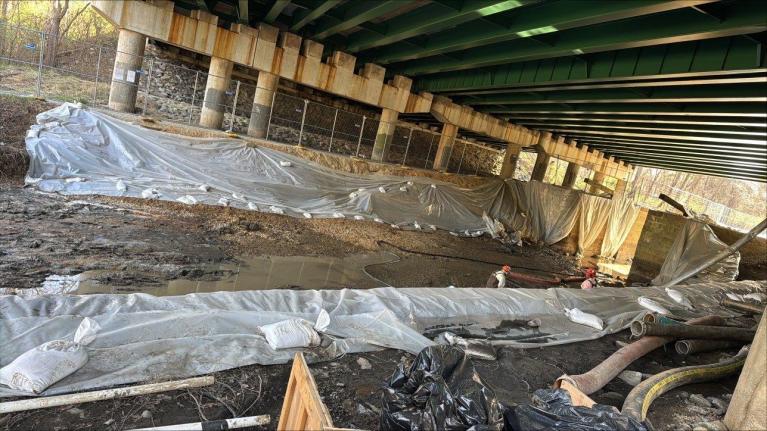
Crews are now constructing an access bridge at the site to begin removing contaminated soil, part of a broader effort to restore the canal back to its original condition, including rebuilding it to National Park Service specifications.
Work continues in other sections of the canal, with crews still removing sludge and debris between Locks 10 and 13. The cleanup process has involved pumping clean water into the canal to create a slurry of sediment that can be vacuumed out more efficiently.
Officials say the initial phase of environmental rehabilitation — including debris removal, soil stabilization and cleanup of nearby drainage channels and shoreline areas — is largely complete in zones directly affected by the overflow.
The focus is now shifting toward longer-term restoration. D.C. Water is coordinating with federal and state agencies on soil testing and environmental monitoring to determine whether additional remediation is needed before landscaping and revegetation can begin.
That next phase is expected to include replanting native vegetation and trees, with some planting planned for the fall to improve survival rates.
Beyond the canal cleanup, the broader Potomac Interceptor project is entering a new stage. Emergency bypass infrastructure is being dismantled, and crews are preparing for long-term rehabilitation of more than 2,700 feet of pipe, including reinforcing the system by inserting a new liner inside the existing structure.
Officials have said the area will remain an active construction zone for months as the project transitions from emergency response to full-scale infrastructure repair.
Water quality monitoring in the Potomac River is ongoing. D.C. Water said fluctuations in bacteria levels are common and often tied to weather and runoff, though testing continues to verify cleanup effectiveness.
While the completion of sludge removal between Locks 13 and 14 marks a milestone, officials say the work ahead — rebuilding infrastructure and restoring the surrounding environment — will define the long-term recovery from one of the region’s most significant recent sewer system failures.