WASHINGTON — With just over 24 hours before government funding runs out, Democrats and Republicans left a White House meeting Monday no closer to a deal to avert a federal shutdown, setting the stage for furloughs and disruptions to federal services beginning at midnight Tuesday.
Senate Majority Leader John Thune, House Speaker Mike Johnson, Senate Minority Leader Charles E. Schumer, and House Minority Leader Hakeem Jeffries emerged from the meeting with President Donald Trump still deeply entrenched in their positions. Democrats pressed for commitments to address rising health care costs, while Republicans insisted on a “clean” stopgap bill to keep the government running through mid-November.
Schumer told reporters afterward that Democrats had made progress in at least forcing the president to hear their concerns but said “large differences” remained. “It is our job as legislative leaders to try and solve this problem, or at least fix the problem,” he said, pointing to Affordable Care Act provisions as a sticking point.
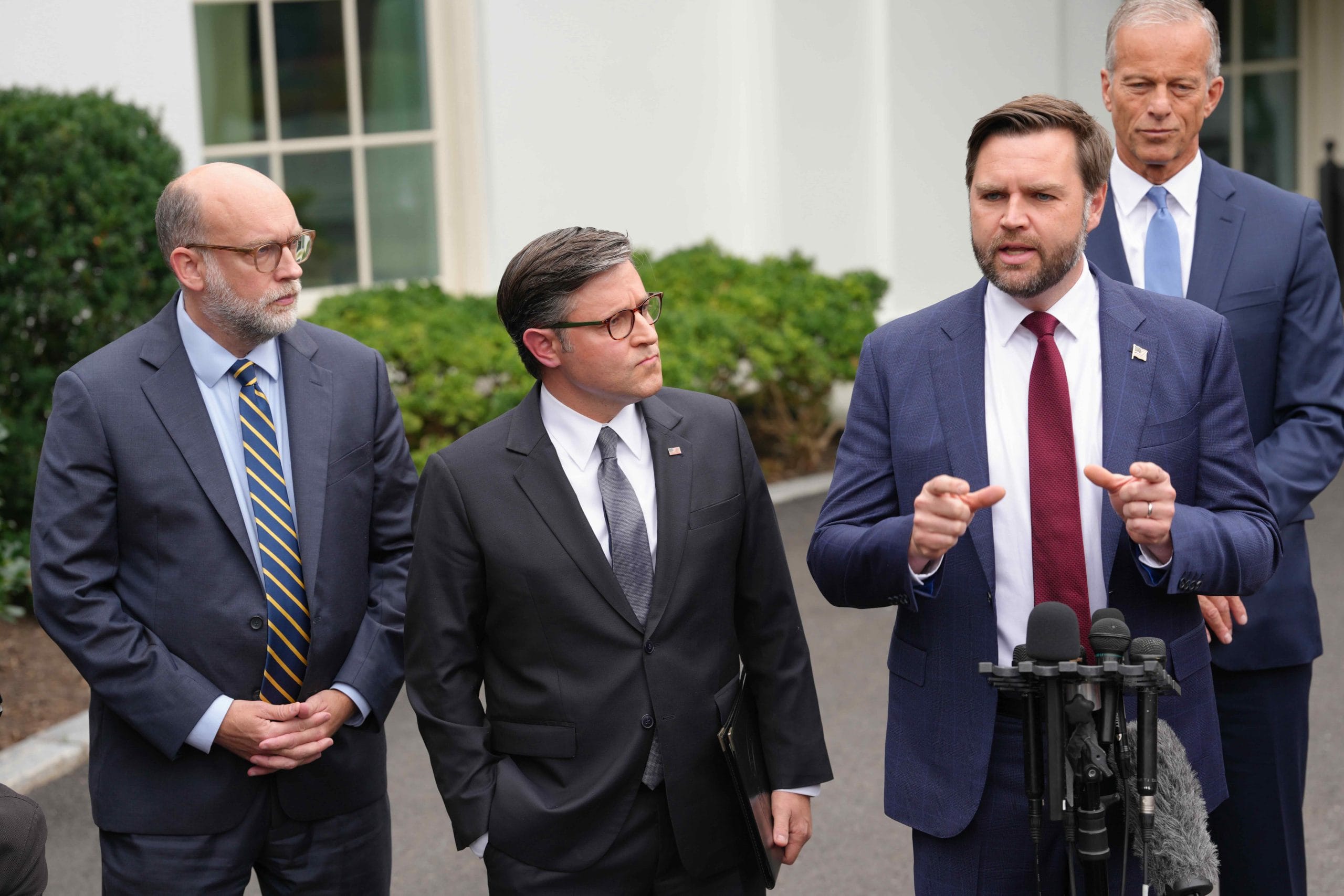
Vice President J.D. Vance, speaking alongside Thune, Johnson and budget director Russ Vought, delivered a blunt assessment: “We’re headed to a shutdown.” He accused Democrats of holding government operations “hostage” to health care negotiations. “Let’s work on it together, but let’s do it in the context of an open government that’s providing essential services to the American people,” Vance said.
If lawmakers fail to reach a compromise, hundreds of thousands of federal employees would be furloughed while others continue working without pay. Essential services from airport security to food safety inspections would continue at reduced capacity, while some public programs would pause.
At the core of the standoff is a sharp dispute over health care policy. Democrats argue that Republicans’ sweeping tax and spending law, touted by Trump as the “one big beautiful bill,” triggered sharp increases in insurance premiums by phasing out enhanced subsidies on the Affordable Care Act marketplace and cutting $1 trillion from Medicaid over a decade.
“We’re deadly serious about addressing the Republican-caused health care crisis,” Jeffries said, noting what he called “the largest cut to Medicaid in American history.” Insurers in 29 states have already sought or secured rate hikes of at least 20 percent for ACA plans, according to Sen. Maria Cantwell. Democrats also object to the administration’s use of impoundments and congressional rescissions to strip funding from programs such as medical research and foreign aid, which Schumer said undermined bipartisan agreements.
Republican leaders countered that Democrats were seizing on the must-pass spending deadline to advance unrelated policy demands. Thune held up the GOP’s temporary funding bill, which would extend government operations until Nov. 21, and dismissed Democrats’ objections as partisan brinkmanship. “This is purely and simply hostage-taking,” Thune said.
Johnson added that the House had already acted when it passed the stopgap measure two weeks earlier, though it cleared with only Republican votes and failed to advance in the Senate.
The measure fell short of the 60 votes needed in the upper chamber despite Republicans holding a narrow majority. Two GOP senators, Lisa Murkowski of Alaska and Rand Paul of Kentucky, joined Democrats in voting against the bill.