BRUSSELS — The European Commission on Friday proposed a fresh round of sanctions aimed at tightening the economic vise on Russia, moving to accelerate an end to purchases of Russian liquefied natural gas and expand penalties on banks, oil shipping and— for the first time — cryptocurrency platforms used to skirt existing restrictions.
If approved by all 27 EU countries, the package would be the bloc’s 19th since the full-scale invasion of Ukraine in 2022. It comes amid a renewed barrage of Russian drones and missiles that has rattled NATO’s eastern flank and struck EU-linked sites in Ukraine, incidents that officials said underscored the urgency of further action.
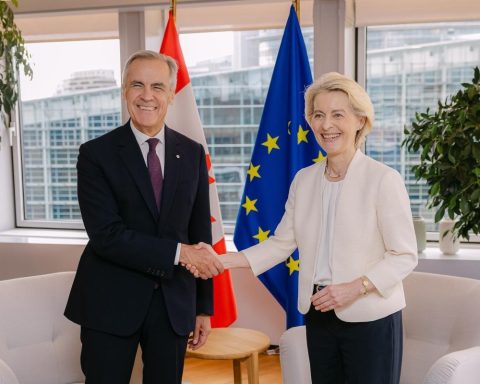
Commission President Ursula von der Leyen said the measures target “Russia’s war economy,” adding: “We will continue to use all the tools at our disposal to bring this brutal war to an end.” She accused Moscow of showing the “full extent of its contempt for diplomacy and international law” in recent weeks.
A centerpiece of the plan is a complete ban on imports of Russian LNG beginning Jan. 1, 2027 — a year earlier than the EU’s previous timetable — coupled with broader attempts to choke off energy revenues by blacklisting additional “shadow fleet” tankers that move Russian oil in violation of price caps and documentation rules. Brussels also proposed full transaction bans on major Russian energy companies Rosneft and Gazprom Neft, a step that could complicate payments even where limited exemptions exist.
The proposal arrives after public pressure from President Donald Trump, who has urged European governments to sever remaining energy ties with Russia as a condition for Washington to adopt “major” new sanctions — a posture that has injected U.S. politics into Europe’s internal debate. EU officials have privately acknowledged the push accelerated their LNG timeline, though they insist the direction of travel was already set.
Beyond energy, the package would widen banking restrictions and, for the first time, place EU controls on crypto platforms that facilitate Russian transactions in global markets. It would also add 118 vessels to the EU’s list of sanctioned ships linked to the shadow fleet and target entities outside Russia accused of helping the Kremlin evade controls, including some in China and Central Asia.
The Commission’s plan now heads to member states for unanimous approval — a process that has frequently exposed divisions over how far and how fast to go. Hungary and Slovakia, which benefit from a long-standing exemption for pipeline crude via the Soviet-era Druzhba network, have previously slowed or softened measures. Brussels did not directly propose scrapping the Druzhba carve-out but said broader bans on transactions with Rosneft and Gazprom Neft would be tightened, potentially raising the cost and complexity of continued purchases.
Diplomats said talks among national ambassadors began Friday under heightened security concerns following reported airspace violations over Poland and Romania tied to Russia’s strikes on Ukraine. Several governments have pressed for additional steps against procurement networks feeding Russia’s defense industry, with new listings for firms in third countries under consideration.
Von der Leyen argued the bloc’s sanctions are biting, citing inflationary pressure and structural strains inside Russia. “Russia’s overheated economy is coming to its limit,” she said, as the Commission rolled out the plan. Independent analysts say sanctions have forced costly workarounds but note that energy cash flows — particularly for LNG and seaborne crude shipped through non-Western insurers and traders — remain a critical lifeline for the Kremlin.
Approval could come within days if consensus holds, officials said, though recent packages have required weeks of haggling. For Kyiv, which has urged tighter enforcement as much as new rules, the measure will be judged by how effectively Europe can enforce it on the high seas and in the gray zones of finance and technology. “It is time to turn off the tap,” von der Leyen said.