WASHINGTON — After a weather-delayed landing at Joint Base Andrews Thursday evening, former President Donald J. Trump spoke briefly with reporters on the tarmac, addressing a wide range of issues from global trade to the war in Gaza.
Mr. Trump confirmed that the proposed sale involving Nippon Steel has not yet been finalized. “No, I have to approve the final deal,” he said, emphasizing that the transaction still requires his personal sign-off. He touted the scale of the proposed investment, calling it “the largest investment in the history of Pennsylvania in any deal, not just steel,” and said it marked a “very big commitment” by the Japanese company.
When asked whether the deal would ensure continued U.S. ownership, Mr. Trump replied, “Well, you’ll see, but I have to approve the final deal with Nippon and we haven’t seen that final deal yet.”
Mr. Trump struck a cautious tone on other global matters as well. Asked whether he supports a bipartisan bill introduced by Senators Lindsey Graham, Republican of South Carolina, and Richard Blumenthal, Democrat of Connecticut, to impose sanctions on Russia, Mr. Trump demurred. “I don’t know. I have to see it. We’ll take a look at it,” he said.
Turning to the ongoing conflict in Gaza, the former president said he remained hopeful about a ceasefire proposal recently submitted by his team. “I think they want to, they want to get out of that mess,” he said of Hamas. “They’re in a big mess. I think they want to get out of it.”
Mr. Trump also addressed broader trade negotiations, noting that while the Nippon deal may not directly influence talks with Japan, “it certainly won’t hurt.” He reserved his highest praise for efforts to reduce tensions between India and Pakistan. “We were able to stop potentially a nuclear war through trade, as opposed to bullets,” he said. “Nobody talks about it, but we had a very nasty potential war… and now if you look, they’re doing fine.”
He added that Pakistani representatives would visit Washington next week and that the administration was “very close” to securing a deal with India. “I wouldn’t have any interest in making a deal with either if they were going to war with each other,” he said.
Looking ahead to the G7 summit in Canada, Mr. Trump offered a brief remark about Mark Carney, the former governor of the Bank of England and a key figure in Canadian economic diplomacy. “He’s a very nice guy… we had some good talks. We’ll see what happens,” Mr. Trump said.
Responding to reports that longtime aide Susie Wiles’s phone had been breached, Trump appeared unconcerned. “She’s an amazing woman. She can handle it… Nobody can impersonate Susie. There’s only one Susie.”
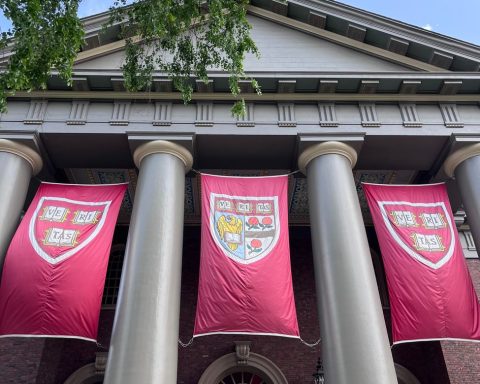
Finally, Mr. Trump addressed concerns from Chinese students studying in the United States about visa restrictions. “They’re going to be okay. It’s going to work out fine,” he said, stressing that background checks were necessary. He then criticized Harvard University, accusing it of withholding information. “We want people that can love our country… and for some reason Harvard doesn’t want to give us a list,” he said.
Mr. Trump did not take further questions before departing via motorcade to the White House. Due to the heavy storms in the Washington D.C. area, Air Force One was diverted as far as Ocean City, Maryland before being allowed to land, and Marine One to the White House had to be replaced by a motorcade.