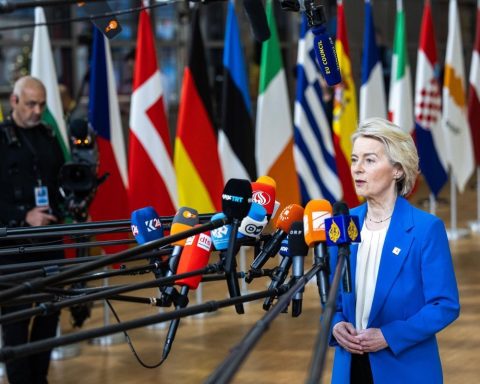
The United States and the European Union have reached a comprehensive trade agreement aimed at strengthening economic ties across the Atlantic. Announced at a joint press conference on Sunday by President Donald Trump and European Commission President Ursula von der Leyen, the deal includes major commitments on energy, foreign investment, military equipment, and tariffs.
“This is a significant agreement between two of the world’s largest economies,” President Trump said. “It will support greater economic cooperation and create opportunities on both sides.”
Highlights of the Agreement
According to the announcement, the European Union has agreed to:
- Purchase $750 billion worth of U.S. energy exports
- Increase investment in the U.S. by an additional $600 billion
- Buy military equipment produced in the United States, with amounts yet to be determined
- Adopt a 15% tariff on a broad range of goods traded between the U.S. and E.U.
- Open European markets further to U.S. agricultural and automobile exports
U.S. officials pointed to automobiles and agriculture as likely early beneficiaries of the deal. President Trump noted that certain American-made vehicles had previously faced barriers in European markets but would now have greater access. He also emphasized the agreement’s potential benefits for American farmers.
In addition, both sides referenced ongoing discussions around chip manufacturing and steel tariffs. A formal announcement regarding semiconductor policy is expected in the coming weeks. Steel and aluminum tariffs, however, will remain unchanged under existing global frameworks.
The agreement also touched on broader defense cooperation. President Trump noted increased defense spending commitments from NATO member states and emphasized continued support for U.S. military exports to Europe.
President Trump indicated that the administration is working on similar trade arrangements with other countries, though none of those negotiations are expected to match the size or scope of the E.U. agreement. He said clarification letters regarding tariff schedules would be sent to certain countries before August 1.
Asked whether the timing of the deal was linked to unrelated domestic news coverage, President Trump declined to address the suggestion, instead reiterating the deal’s focus on economic cooperation and job creation.
Both leaders acknowledged the complexity of the negotiations and credited their respective teams for the outcome. “There was a lot of heavy lifting,” von der Leyen said. “But we’ve reached a result that supports jobs, trade, and investment on both sides.”
The agreement marks one of the most expansive U.S.–E.U. trade frameworks in recent years and is expected to influence global trade discussions in the months ahead.