Measles cases in the United States have climbed to their highest level in 35 years, surpassing last year’s total with more than five months remaining in 2026 as outbreaks spread across the country and childhood vaccination rates continue a years-long decline.
At least 2,295 cases had been confirmed nationwide as of Tuesday, according to researchers at Johns Hopkins University, eclipsing the 2,289 cases recorded during all of last year. The Centers for Disease Control and Prevention has since put the number even higher, at 2,318 cases.
The last time the United States recorded more measles cases in a single year was 1991.
The resurgence has reached the Washington region, though unevenly. Virginia has reported more than 100 cases this year after recording just five in all of 2025. Maryland has confirmed 12 cases, four times the three recorded there last year. And at least two District residents have contracted measles this year, according to public notices issued by DC Health.
The rising case counts come as the share of American children vaccinated against measles has steadily fallen, leaving a growing number of communities below the level public health officials say is needed to prevent outbreaks.
Nationally, 92.5 percent of kindergartners had received the required measles, mumps and rubella vaccinations during the 2024-25 school year, according to CDC data. Five years earlier, in 2019-20, the figure was 95.2 percent.
The seemingly modest decline represents hundreds of thousands of children and has pushed the country below the roughly 95 percent vaccination level generally considered necessary to provide community protection against measles, one of the world’s most contagious diseases.
The decline has accelerated concerns among public health experts about whether the United States could lose the measles elimination status it achieved in 2000, when continuous transmission of the virus within the country was declared eliminated.
The Washington region has not entirely followed the national trend.
Maryland reported an MMR vaccination rate of 99.3 percent among kindergartners surveyed during the 2024-25 school year, according to the Maryland Department of Health. Virginia has also generally remained near the 95 percent threshold, while the District’s vaccination rate has risen substantially from lows recorded during the coronavirus pandemic.
Those statewide figures, however, can obscure pockets of unvaccinated residents where measles can spread rapidly once introduced.
Virginia offers perhaps the starkest local example.
The state reported only five measles cases during all of 2025. This year, a large outbreak centered in central Virginia helped push the total to 129 cases by late June, according to the Virginia Department of Health. More than 100 of those cases were associated with an outbreak in Buckingham County and surrounding areas.
As of early June, 97 percent of Virginia’s measles patients were either unvaccinated or had an unknown vaccination status, state health officials said.
Maryland, despite its particularly high statewide vaccination rate, has also seen a sharp increase.
The state confirmed its 12th measles case of the year Friday in a Central Maryland resident, according to the Maryland Department of Health. Other cases announced this month have included residents of Central and Southern Maryland.
The state’s 12 cases compare with three during all of 2025 and one case in each of the previous two years.
In the District, DC Health announced confirmed infections in District residents in May and June. The agency does not appear to publish a running 2026 total, and other people infected with measles have traveled through the District this year, creating potential exposure sites without necessarily counting as D.C. cases.
The national resurgence comes amid a broader debate over federal vaccine policy under Health and Human Services Secretary Robert F. Kennedy Jr., who spent years questioning the safety of vaccines before joining the Trump administration.
Public health experts have criticized Kennedy’s record on vaccines and warned that skepticism about immunization could further erode vaccination rates.
The decline visible in federal data, however, began years before Kennedy took office.
During the 2019-20 school year, 95.2 percent of U.S. kindergartners were vaccinated against measles, according to the CDC. Coverage dropped to 93.9 percent the following year and to 93 percent in 2021-22. It remained at 93.1 percent in 2022-23, slipped to 92.7 percent in 2023-24 and fell again to 92.5 percent last school year.
The two-dose MMR vaccine is about 97 percent effective at preventing measles, according to the CDC. One dose is about 93 percent effective.
Measles spreads through the air when an infected person coughs, sneezes or breathes, and the virus can remain infectious in the air for as long as two hours after an infected person leaves an area. An infected person can transmit the disease to as many as 90 percent of nearby people who are not immune.
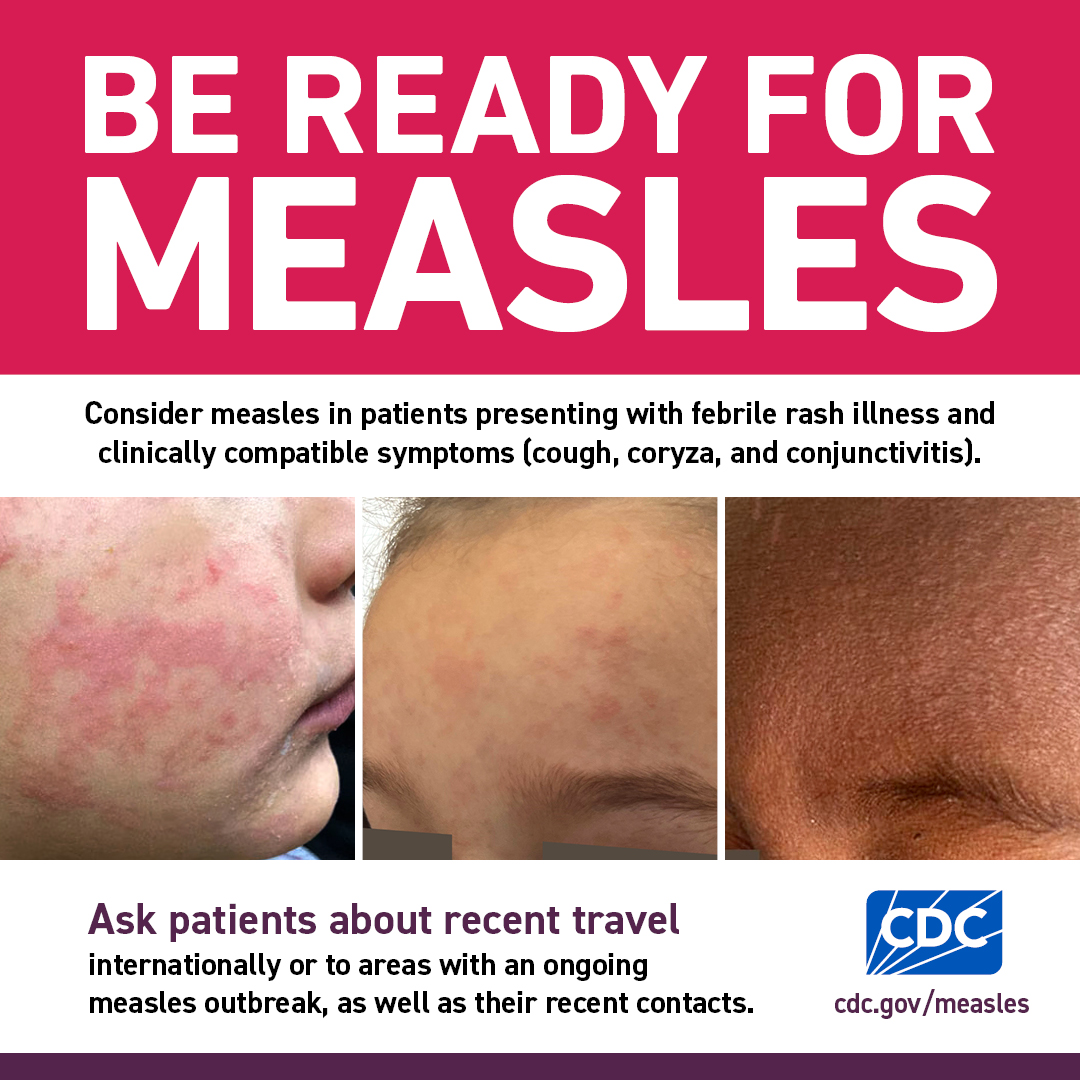
Most cases begin with fever, cough, runny nose and red or watery eyes before the characteristic rash appears. The disease can also cause pneumonia, brain inflammation and, in rare cases, death.
No deaths have been reported in the United States from measles so far this year, but children have been hospitalized. Sixty-nine percent of this year’s cases have occurred among people younger than 20, according to federal data.
When measles was declared eliminated in the United States more than a quarter-century ago, that did not mean the virus had disappeared entirely. Travelers continued to bring cases into the country. But high vaccination levels generally prevented those infections from developing into sustained chains of transmission.
That barrier has become increasingly porous as vaccination coverage has fallen.
Whether the resurgence is enough to cost the United States its measles elimination status could be determined later this year. The Pan American Health Organization is expected to review the country’s status in November.